


Allied Health services in Central Victoria
As an Allied Health provider, our team of dedicated social workers and therapists can assist with mental and behavioural requirements for all ages.

Mental health social workers
At Central Victorian Child Health, we have a team of dedicated and experienced mental health social workers who specialise in a variety of mental health services for children, families and individuals.
Our mental health team have increased their availability and are now open to referrals. Referrals are accepted from your GP under a Mental Health Care Plan, NDIS or Privately via full fee payment. Self-referrals are also accepted under a full fee payment with no Medicare rebate.
Our team are ready to welcome you with flexible availability during and after business hours and weekends. Please contact us to discuss further.

Family Therapy
Our family therapy sessions are designed to assist family members, both individually or as a group, when they are dealing with a chronic medical conditional or mental illness, navigating divorce, blending families, grieving, or experiencing behavioural issues or life changes. Using talk therapy, the aim is to help family members communicate, resolve conflicts and improve overall relationship dynamics.
The focus is on treating the family as a whole unit, by looking at how the interactions and environment impact everyone. Sessions can involve any combination of loved ones, such as parents and children, siblings, or extended family. Not every session requires the whole family; a therapist might also meet with individuals or specific pairs.
Play Therapy
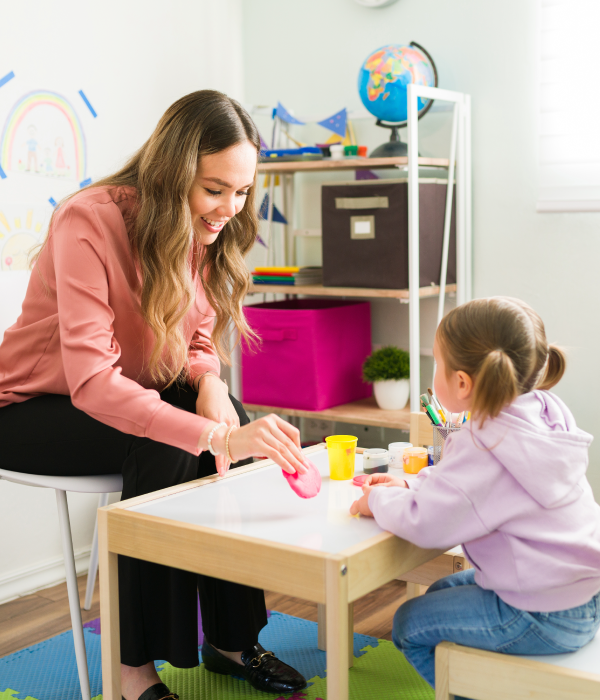
Play therapy is a developmentally appropriate and evidence-based approach for supporting children with anxiety, trauma, neurodivergence, grief and relational challenges.
This form of therapy allows children to express and process their emotions through play, rather than relying solely on verbal communication. Activities are adapted to the child’s age and interests, with the goal of helping children manage their emotions, process trauma, improve their confidence and develop strategies.
If your child has struggled with verbal therapy in the past, play therapy may be a good option and we recommend getting in contact to discuss further.

Mental Health Support
Mental Health Social Workers and Mental Health Nurses provide specialised support to children and adolescents experiencing emotional, behavioural, social, or mental health challenges. Using a strengths-based and person-centred approach, they work with young people, families, schools, and other professionals to promote wellbeing, resilience, and positive development. They can help with:
Emotional and mental health concerns, including anxiety, depression, stress, low self-esteem and emotional regulation difficulties
Behavioural challenges, such as anger management difficulties, impulsivity, disruptive behaviours, and challenges with peer relationships.
Trauma and adverse life experiences, supporting children and adolescents affected by trauma, bullying, grief and loss, parental separation and transitions
Family and relationship issues, helping improve communication, strengthen family relationships, navigate conflict, and support effective parenting strategies.
School and educational concerns, including school refusal, attendance difficulties, academic stress, social challenges, and transitions between schools or life stages.
Social and developmental challenges, assisting young people to build confidence, social skills, problem-solving abilities, and healthy coping strategies.
Mental health assessment and therapeutic intervention, identifying needs, developing care plans, and delivering evidence-informed interventions to support recovery and wellbeing.
Advocacy and care coordination, connecting young people and families with appropriate health, educational, and community services, while ensuring their voices and needs are represented.
Crisis support and safety planning, helping children, adolescents, and families manage periods of heightened distress and develop strategies to maintain safety and stability.